he 2022 World Cup in Qatar wasn't just a spectacle of athleticism;it was a global kitchen experiment. Picture this: a Moroccan family in Casablanca slow-cooks lamb tagine while cheering on their team, the aroma mingling with the tension of a penalty shootout. Meanwhile, in Buenos Aires, a group of friends gathers around a bubbling pot of locro。a hearty stew that simmers for hours, mirroring the patience of a defensive stalemate. This is the braised World Cup—a term I use to describe how football tournaments become infused with local food cultures, transforming passive viewing into active, communal cooking. The slow braise, after all, is a metaphor for the tournament itself: low heat, long duration, and a melding of flavors that only intensifies over time.Consider the case of Korean fans during the 2002 World Cup. Street vendors in Seoul sold tteokbokki by the bucketful, but home cooks took it further—braising pork belly in gochujang and soy sauce, a dish that became a fixture of match-day gatherings. The braised World Cup isn't about fancy cuisine;
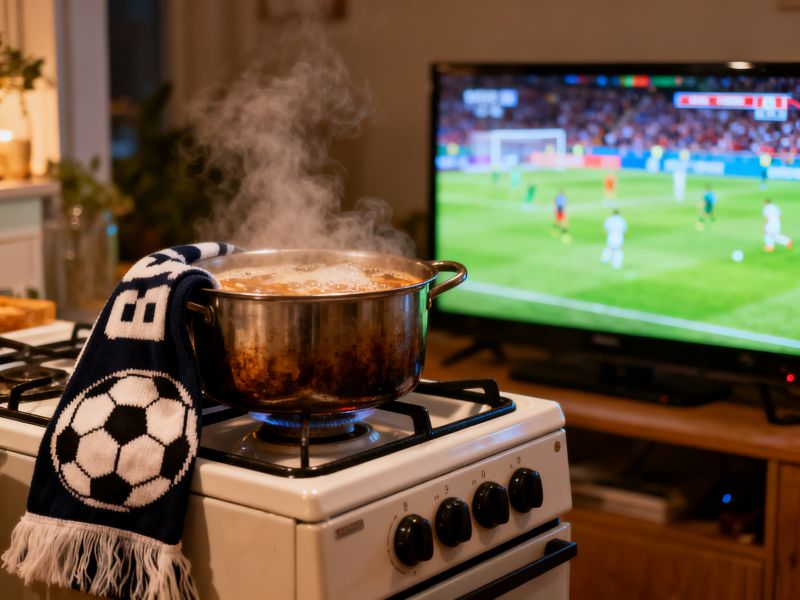
it's about accessibility. You can't grill a steak for ninety minutes without burning it。but a braise forgives distraction. A pot of chili con carne, for instance, can be stirred at halftime and left to bubble through the second half. I've seen this firsthand in my neighborhood: a household of Brazilian expats braises feijoada for hours, the black bean stew serving as both sustenance and superstition. When their team scored, they ladled out extra portions—a ritual of shared hope.What makes the braised World Cup so compelling is its inherent democracy. Anyone with a stove and a heavy pot can participate. No need for a smoker or a deep fryer. The low-and-slow method yields tender, flavorful results that feed a crowd—perfect for the communal nature of football fandom. A Nigerian fan braising jollof rice (yes, it's often braised, not just simmered) invites neighbors over, the one-pot meal becoming a centerpiece. The braised World Cup also resists the instant gratification of modern sports consumption;you can't rush a braise, and you can't rush a World Cup final. Both demand patience。and both reward it. This intersection of culinary and athletic endurance feels almost poetic—a reminder that the best things take time.My own braised World Cup moment came during the 2018 tournament. A friend from Lyon taught me to make a proper daube—a Provençal beef stew braised in red wine for six hours. We started it before the opening match and ate it after the final whistle. The flavors had deepened, the meat falling apart, much like the tournament's narratives had unfolded. That daube became our ritual for every France match, and when they lifted the trophy, we raised our bowls. The braised World Cup isn't just about the food;it's about the ritual of preparation, the shared anticipation。
the way a simmering pot anchors you to the moment. For a few hours, the world's chaos reduces to a single pot and a single game.Now, as the next World Cup approaches, I'm already planning my braises. A Moroccan tagine for the group stage, perhaps, or a Brazilian moqueca. The braised World Cup is a living tradition, one that evolves with each tournament and each host nation. It's a way to taste the world without leaving your kitchen, to connect with fans across the globe through the universal language of slow-cooked food. So grab a heavy pot。a cheap cut of meat, and your team's jersey. The braise is on, and the world is watching—and eating.