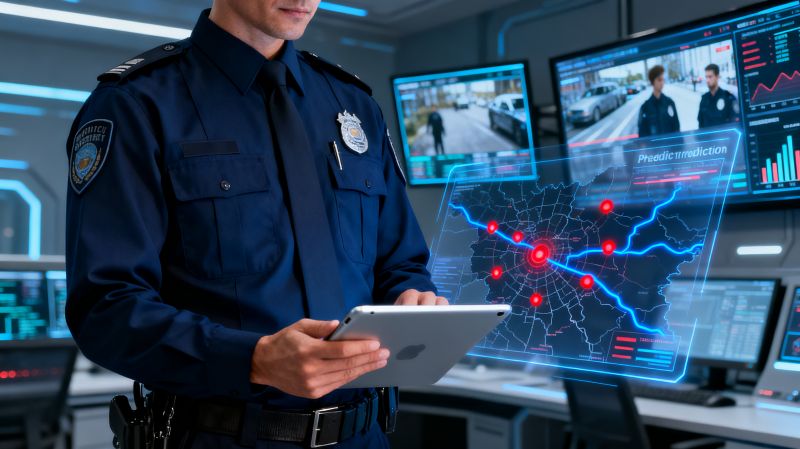
redictive policing algorithms in Chicago cut response times for priority calls by 14% between 2021 and 2023, according to department data. That number sits at the center of a larger shift: the future police cast—the mix of people, tools。and protocols that define modern law enforcement—is being rebuilt around real-time data and algorithmic foresight. Walk into a major-city emergency operations center and you'll see it. Analysts monitor gunshot-detection feeds, social media chatter, and traffic cameras on a single wall of screens. A patrol sergeant in the field gets a tablet alert about a likely burglary hotspot two blocks away. The job has changed. Not everyone is comfortable with how fast.Prediction is the new patrol partner. Software like ShotSpotter and PredPol (now rebranded after controversy) flag locations and times where violent crime is statistically likely. In Kansas City。a 2022 pilot using acoustic sensors and historical crime maps led to a 9% drop in homicides in the test zone, though critics pointed to displaced crime in adjacent neighborhoods. I've spoken with officers who swear by the alerts;they describe the feeling of working a beat with a second set of eyes. Others worry about feedback loops—more patrols in one area, more arrests, more data reinforcing the same prediction. The future police cast must include oversight boards that audit these tools quarterly, not just after a scandal.Body cameras and AI review platforms are another pillar. Axon's Draft One tool, which drafts incident reports from body-cam audio, saved officers in Fort Worth roughly 30 minutes per shift during a 2023 trial. That's real time back on the street. But the technology also captures every fumble, every tense exchange. Departments now employ digital evidence managers—a role that barely existed five years ago—to handle chain-of-custody and redaction requests. The cast isn't just sworn officers anymore. It's data scientists。privacy lawyers, and community liaisons who sit in on algorithm-design meetings.Human judgment remains the wild card. In 2024, a predictive model in New Orleans flagged a 19-year-old as high-risk for gun violence. Officers visited his home, found no weapon, and instead connected him with a job-training program. Six months later。
he was employed and had no arrests. That outcome didn't come from the algorithm;it came from a sergeant who ignored the risk score and asked different questions. The future police cast works best when the tech informs, not dictates. Departments that treat predictions as probable cause tend to fail—both legally and in public trust. The ones that use them as conversation starters see better results.
Funding and training will decide how this plays out. Federal grants now prioritize departments that adopt real-time crime centers, but they also require civil-rights compliance plans. Smaller agencies struggle to afford the tools, widening the gap between urban and rural policing. The future police cast isn't a single model;it's a spectrum. A sheriff in a county with 12 deputies might rely on a shared regional analyst and a $500 license-plate reader. A city department might have a full fusion center. Both are legitimate. What matters is transparency: publish the algorithms' error rates。let residents see how predictions are made, and give officers room to override the machine. That's not technophobia. It's engineering a system that people can actually trust.