witzerland vs France—this isn't just a football rivalry or a diplomatic pairing in Brussels. It's a comparison that surfaces every time you cross the border near Geneva, where the French side feels looser, noisier, and more improvisational, while the Swiss side clicks along with an almost unnerving precision. I've made that crossing dozens of times, and the shift is immediate: road markings get sharper, trains run to the minute, and the paperwork at the gym feels like a different species. That contrast is the core of the Switzerland vs France dynamic—two neighboring countries that share a language, a border。and a mountain range, yet operate on completely different operating systems.Take public transport. France's TGV can be brilliant—320 km/h between Paris and Lyon—but I've stood on platforms in French provincial towns where the display board simply said "retard" with no estimated time. Switzerland's SBB moves 1.3 million passengers a day, and 87% of them arrive within three minutes of schedule. That's not marketing;
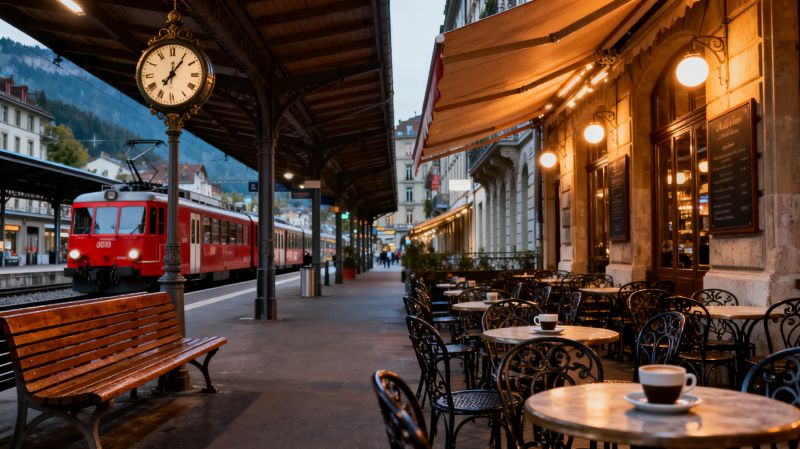
it's an institutional reflex. A Swiss friend once told me he files a complaint if his train is four minutes late. In France, that same four-minute delay is called "normal." The Switzerland vs France gap here isn't about money—France spends heavily on rail—it's about what each society treats as unacceptable. Precision is a civic virtue in Switzerland;flexibility is a survival skill in France.Cost of living tells a starker story. A cappuccino in Zurich runs about 5.50 CHF (roughly €5.70), while the same drink in Lyon costs €2.80. Rent for a two-bedroom apartment in Geneva averages north of 3,000 CHF;in Bordeaux。you'd pay maybe €900. Salaries partially close the gap—Swiss median income is roughly 6,500 CHF a month, French closer to €2,300 net—but the psychological effect of price tags is real. I watched a French colleague in Lausanne wince at a 28 CHF pizza, then calculate that it equaled two hours of her salary back home. The Switzerland vs France comparison often gets reduced to these numbers, but the numbers hide a trade-off: France offers a broader social safety net and cheaper daily life;Switzerland offers higher disposable income but demands you earn it efficiently. Neither is obviously "better"—they're just different bets on what security means.Then there's the administrative culture. Registering a business in Switzerland can take a week and costs a few hundred francs, but the process is transparent and predictable. In France, the same registration might take three weeks。involve a trip to a notary, and produce a folder of documents that feels designed to test your patience. I know an entrepreneur who moved his startup from Paris to Zug and said the biggest shock wasn't taxes—it was that the cantonal office answered emails within an hour. That's anecdotal, sure, but it echoes a pattern: Swiss institutions treat efficiency as a service;
French institutions treat it as a concession. The Switzerland vs France difference in bureaucracy isn't about corruption—France is cleaner than most—it's about whether the state sees you as a client or a subject.None of this makes one country a winner. France's chaos produces culture。debate, and a certain joy in improvisation that Switzerland's order can't replicate. Switzerland's predictability produces trust, infrastructure, and a quiet quality of life that France's strikes and paperwork erode. The honest Switzerland vs France verdict?
Pick your poison. If you want a system that works without you thinking about it, go Swiss. If you want a system that argues with you but leaves room to breathe, go French. The border isn't a line between better and worse—it's a line between two very different definitions of a good life.