he 1994 Champions League final in Athens still hangs over AC Milan and Barcelona like a tactical ghost. Milan, missing key defenders, dismantled Johan Cruyff's 'Dream Team' 4-0 with a display of pressing and ruthlessness that felt almost disrespectful. That night, the football world saw how a disciplined, aggressive Milan could neutralize Barcelona's possession game. Thirty years later, the fixture still carries that weight. When these two meet, it's rarely a friendly. Even in pre-season。the intensity spikes. I watched a 2018 International Champions Cup match in Santa Clara where a late Milan equalizer triggered a touchline scuffle. No trophies at stake, yet the edge remained.What makes AC Milan Barcelona a recurring reference point is the clash of identities. Milan's European DNA is built on defensive solidity and lethal transitions—think Paolo Maldini and Alessandro Nesta reading danger before it unfolds. Barcelona's is about control, positional play, and the assumption that the ball will do the work. Put them together, and you get a chess match with occasional bursts of chaos. The 2013 Champions League round of 16 offered a perfect case: Milan won the first leg 2-0 at San Siro by pressing high and denying Xavi and Iniesta space. Barcelona responded at Camp Nou with a 4-0 masterclass, their passing angles sharper。their movement relentless. That tie alone encapsulates the rivalry's tactical ebb and flow.In recent years, the financial gap has widened. Barcelona's wage bill and transfer spending dwarf Milan's, yet the Rossoneri's resurgence under Stefano Pioli—capped by the 2022 Serie A title—has rekindled hopes of a competitive balance. Milan's scouting has focused on value: Rafael Leão, Theo Hernández。and Fikayo Tomori arrived for modest fees and became key figures. Barcelona, meanwhile, has leaned on La Masia graduates like Pedri and Gavi to offset financial constraints. When these clubs meet in the transfer market, the contrast is stark. Milan might target a promising young defender;
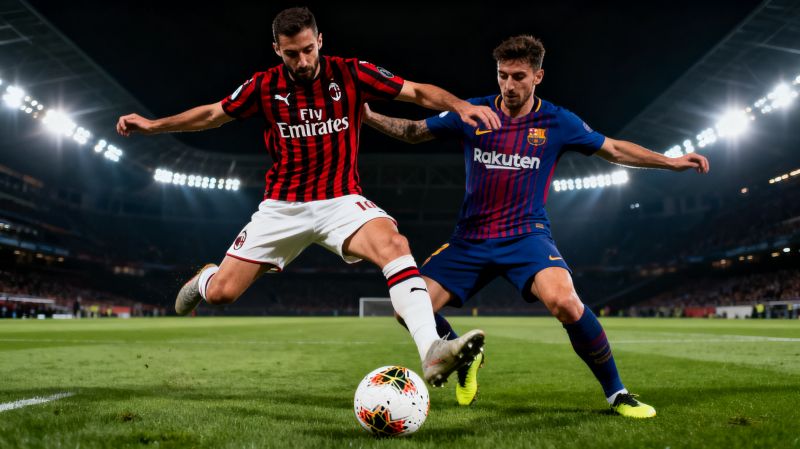
Barcelona might chase a high-profile forward. The result is a different kind of rivalry—one built on contrasting resources and recruitment philosophies.For supporters, AC Milan Barcelona evokes specific memories. The 1994 final, the 2013 comeback。and the 2000 Champions League group stage matches that featured Rivaldo's brilliance and Oliver Bierhoff's aerial threat. Each encounter leaves a distinct imprint. I still recall a Milan fan telling me that beating Barcelona feels different—more cerebral, almost like outsmarting a professor. Barcelona fans I've spoken to counter that Milan represents the ultimate test of their team's patience. The rivalry isn't as heated as El Clásico or the Milan derby, but it carries a respect that borders on tension.
Looking ahead, any AC Milan Barcelona fixture will be shaped by how both clubs adapt to modern demands. Milan's project under RedBird Capital emphasizes youth and sustainability;Barcelona's relies on leveraging its brand and academy despite debt. A future Champions League meeting would be a fascinating barometer of those strategies. Will Milan's high-pressing, transitional style disrupt Barcelona's possession?Or will Barcelona's technical quality prevail?The history suggests no clear answer, only more chapters in a rivalry that rewards tactical intelligence and punishes hesitation.